The EucharistCommunion5 min read
Part 1 - In the Beginning
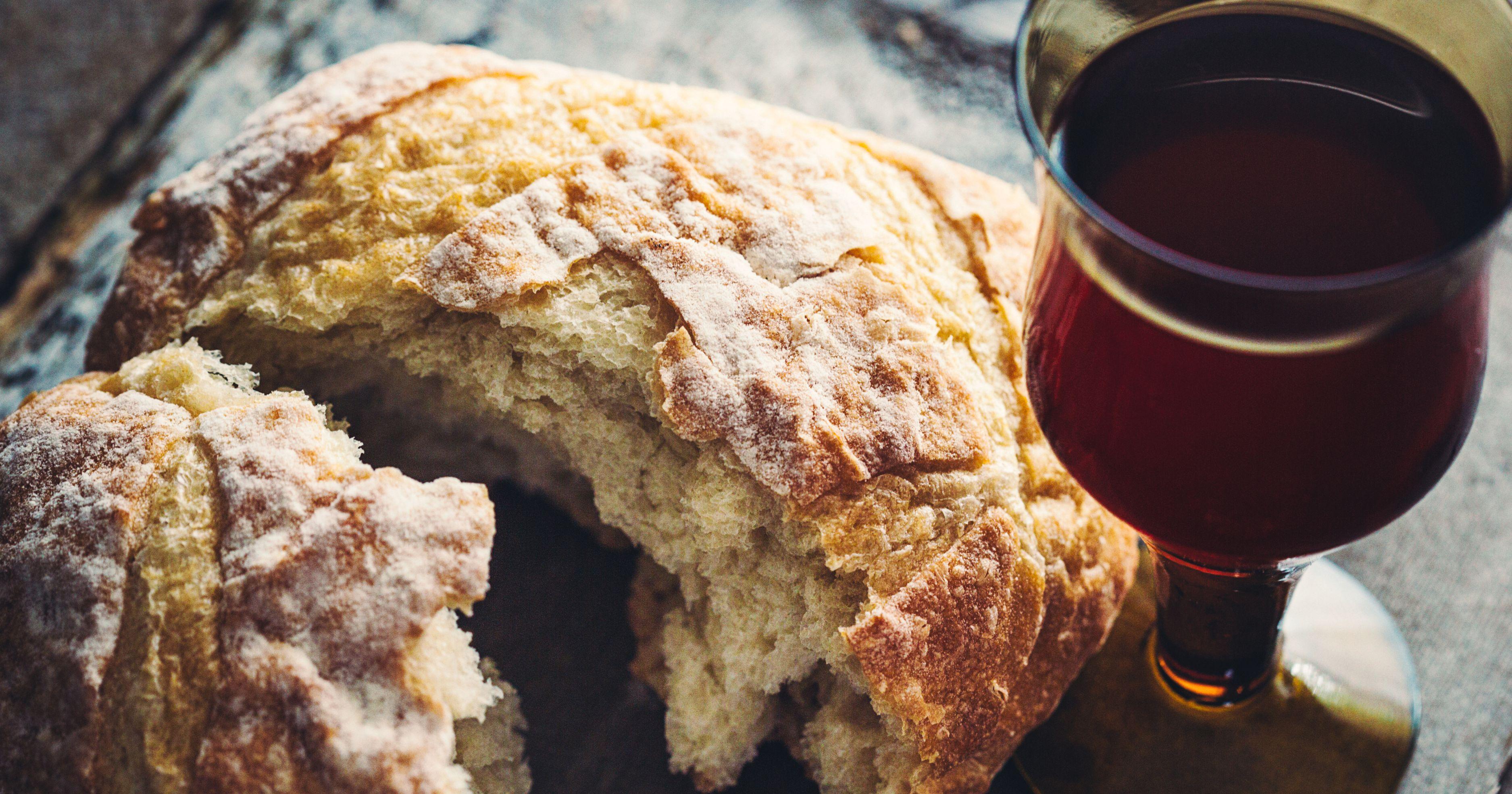
I am trying to remember how it all began, or at least when. But, even with the benefit of approximately three months of hindsight, I can only make ‘it’ out as an intersection of when and what. The when was sometime during the last school holidays, when, after stumbling across a podcast featuring an interview with the Assyrian priest Bishop Mar Mari Emmanuel, I found myself contemplating a common Christian practice that I’d not previously considered in the same light in which I was now hearing it presented.
I listened in awe, as Bishop Mar Mari spoke for about 40 minutes on the Eucharist. I listened with a mix of wonder at his deep humility and love for Jesus, which seemed to seep out of every word he spoke, as he explained the Eucharist in a way that I had never heard about in my 40-something years of church life. “The Eucharist is the body of Jesus Christ…if you don’t have it, then you have no life in you” (The Salt Podcast, 2025). Hang on a second, you mean to tell me that all the early Church Fathers agreed on this perspective? (The Salt Podcast, 2025). Had I ever considered communion to be more than a symbol? I don’t think so. I searched the chapters in the Bible for myself: “Jesus said to them, ‘Very truly I tell you, unless you eat the flesh of the Son of Man and drink his blood, you have no life in you’” (John 6: 53, NKJ). Hmnnn…I started to wonder if I had completely missed out on something vital—in the literal, life-giving sense—to my Christian walk. I don’t even know if I’d ever considered it to be more than a symbol—an important one, but a symbol nonetheless.
Jesus said to them, ‘Very truly I tell you, unless you eat the flesh of the Son of Man and drink his blood, you have no life in you’’.
So it was then that I began to wonder and consider whether something was amiss with my Protestant experience. The day after I finished listening to Bishop Mar Mari was the first day back of the school term at my new school, which coincidentally coincided with my first teachers’ chapel service. Oddly enough, it happened to be an Anglican Eucharist service. I felt excited to be able to participate in communion with a renewed sense of significance and an emerging understanding of its importance in the life of the believer. It was one of those strange God coincidences. You know, the ones that could easily be mistaken for happenstance but, however small, carry an undeniable and inexplicable sense of uncanny timing.
It’s not often that awe strikes twice within 48 hours, but sure enough, I left that school Eucharist service awe-struck. I felt amazed that I was able to partake in communion so quickly after watching Bishop Mar Mari, and also at the way the Anglican priest presented and discussed it. I couldn’t help but think how different the whole experience was from my own Pentecostal communion experience. Someone normally says something briefly about communion, be that my pastor or another leader in the church. We then pause for a couple of minutes to unwrap our little plastic cups and peel back the foil that covers our individual wafers, before consuming our individual portions and move on. In comparison to the Anglican service I had just experienced, it feels like much less of a big deal - for want of better words.
I started to look at how other Christian traditions outside of my Pentecostal experience view communion. I listened to Eastern Orthodox, Oriental Orthodox, and Catholic priests talk about its significance. I was able to have a conversation with the Anglican priest from my school about it and saw that all four churches have much more in common in their perspectives on communion. I read and re-read John 6 and 1 Corinthians 11 over and over again, eventually feeling, with each reading and interview I listened to, that I had unintentionally been short-changed in my Christian experience. I found myself feeling hungry for the Eucharist. I couldn’t even remember the last time we had had communion at my church. Maybe a month prior, maybe five weeks? Something that I had up until very recently treated with much less importance was starting to become a growing problem in my Christian walk.
I did what I do, and listened more and read more. The more I listened to people online talking about Orthodoxy, and communion in particular, the more I started to wonder and talk to God about whether or not we were—or are—in the wrong church tradition. I remember praying to God and telling Him (and later a couple of friends), that if God wanted us in the Orthodox Church, then he would have to tell my husband that we had to leave. Funnily enough, I shared my concerns with a dear Christian friend of mine who told me that I was the third person in the last week to talk to her about Orthodoxy. She then mentioned she was going to spend the weekend with a friend of hers whose husband is an Orthodox priest. She was kind enough to speak to him about me, and he passed on the name of a father in my area and his church for her to give to me. I looked at the name of the church and saw that I had already Googled it. This would be the one, I said to myself, if there was to be one.
I then ordered an Orthodox Study Bible. The first one never came, and so I ordered a second one. I found a Coptic Book of Prayers online, and I found an Orthodox Bible study on my Bible app. I started getting up earlier and reading the prayers. I learned about the depth and simplicity of the Jesus Prayer. I started doing short fasts and praying from the Coptic Book of Prayers, and after maybe a month, I noticed myself feeling different. Not better, just more aware. More aware of my own sinful nature and need for Jesus, and a growing sense that the more I learned, the less I knew.
Little did I know at that point that a ritual I didn’t even participate in every week at my church would be the impetus for a season of deep questioning and wrestling with my own traditions, church history, and faith.
References
The Salt Podcast. (2025). EP10 | Bishop Mar Mari message to Protestants [Video]. YouTube. https://www.youtube.com/watch?v=QugmrpN1JhA